How to Choose the Right Reinforcement Steel for Your Dream Home: A Complete Buyer's Guide
Your home is likely the biggest investment you will ever make, and its strength begins with what you cannot see: the steel inside the concrete. Many homeowners spend weeks choosing tiles and paint but only minutes on reinforcement, which is a costly mistake. Choosing the best TMT bar for house construction protects your family, your budget and your peace of mind for decades.
This guide explains what TMT is, which grades matter, and how to spot quality before you buy.
What Is TMT Steel and Why Does It Matter?
TMT stands for Thermo Mechanically Treated. During manufacturing, hot-rolled bars are rapidly cooled with water, which hardens the outer surface while the core stays soft and ductile. The result is a strong exterior with a flexible interior. Searching for the best TMT steel for house construction begins with understanding this process, because it delivers the tensile strength, bendability and earthquake resistance that older plain or twisted bars cannot match.
Concrete is strong in compression but weak in tension. Steel reinforcement carries the tensile load in beams, slabs, columns and foundations. If the bars are weak, brittle or prone to early rusting, cracks appear and structural safety is compromised.
Key Features of the Best TMT Bar for House Construction
Whichever product you consider, check these qualities:
- High yield strength: At least 500 MPa for modern residential buildings.
- Ductility and elongation: Bars should bend under stress rather than snap, which is vital in earthquake-prone regions.
- Corrosion resistance: Essential in coastal, humid and heavy-monsoon areas where rust shortens a building's life.
- Weldability: Controlled carbon and sulphur content allows clean joints and lap splices.
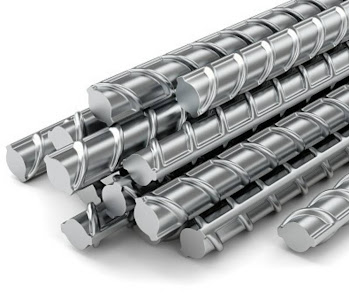
- Uniform rib pattern: Well-shaped ribs grip concrete tightly and improve bonding.
- Fire resistance: Good bars retain strength at high temperatures.
- BIS certification: Look for the ISI mark under IS 1786.
Understanding TMT Grades: Fe 500, Fe 500D and Fe 550D
The grade tells you the minimum yield strength and ductility of the bar.
- Fe 500: Yield strength of 500 MPa. Suitable for general low-rise construction.
- Fe 500D: Same strength with better ductility and elongation. It performs well under seismic stress and is the most recommended grade for homes.
- Fe 550D: Higher strength, useful for high-rise buildings and heavy structural loads, but usually costlier.
For a typical residential building up to G+3, Fe 500D is often the smartest choice. Many structural engineers consider it the best TMT steel for house construction because it balances strength, flexibility and cost.
Choosing the Right Bar Diameter
Different parts of a house need different sizes:
- 8 mm: Stirrups, rings and light distribution steel.
- 10 mm and 12 mm: Slabs, sunshades, lintels and beams.
- 16 mm and 20 mm: Columns, plinth beams and footings.
- 25 mm and above: Heavy-load structures and deep foundations.
Always follow the structural drawing prepared by your engineer rather than guessing quantities to save money.
How to Check TMT Bar Quality Before Buying
A few simple checks can save you from expensive repairs later:
- Look for markings. Genuine bars carry embossed brand names, grade and size along the length.
- Ask for a test certificate. Reliable manufacturers provide mill test certificates for each batch.
- Inspect the surface. Ribs should be uniform, with no cracks, bends, flakes or heavy rust.
- Do a bend and re-bend test. Quality bars bend without cracking on the outer surface.
- Verify weight per metre. Underweight bars mean less steel than you are paying for.
- Buy from authorised dealers. This reduces the risk of counterfeit or rejected material.
Follow this checklist and you can shortlist the best TMT steel for house construction much faster.
A Brand Worth Exploring
When comparing options, it helps to review a manufacturer's grades, certifications and product range in detail. KVS Premier is one brand you can explore as you evaluate what suits your project. Comparing certified options this way helps you find the best TMT bar for house construction within your budget.
Common Mistakes Homeowners Make
- Choosing on price alone. Cheaper bars often cut corners on strength or ductility.
- Ignoring grade. Using Fe 500 where Fe 500D is required reduces earthquake safety.
- Poor storage. Bars left on wet ground or uncovered rust before they reach the slab.
- Skipping expert advice. Never change diameter or spacing without your engineer's approval.
Remember, the best TMT bar for house construction is not the cheapest one; it is the one that meets your engineer's specification and carries proper certification.
Storage and Handling Tips
Keep bars off the ground on wooden or concrete supports, cover them during monsoon, and avoid contact with oil, mud or chemicals. Light surface rust is usually acceptable, but flaking rust should be cleaned or the bars rejected.
Final Thoughts
Steel is the skeleton of your home, and the right choice decides how well it stands up to load, weather and time. Ultimately, the best TMT steel for house construction is BIS-certified, ductile, corrosion-resistant and matched to your structural design. Do your research, verify quality on site, and work closely with your engineer. A small investment in the right reinforcement today prevents major repairs tomorrow.

.jpg)

Comments
Post a Comment